
Aerospace Engineering & Test Technician
Prepare equipment, conduct tests and record results that help engineers assess aerospace hardware.
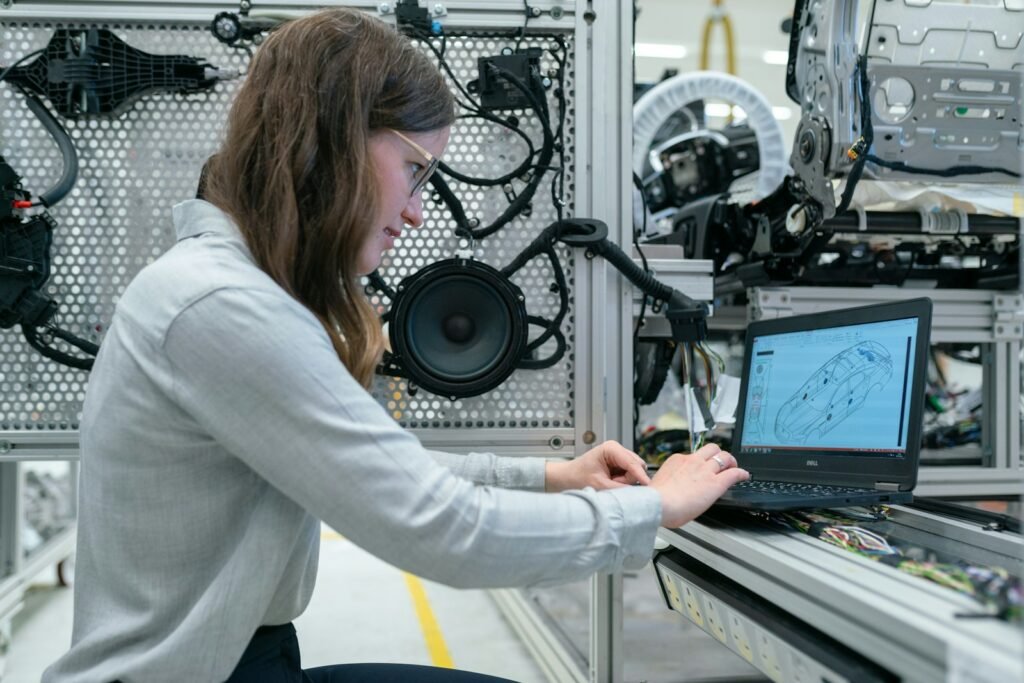
Work behind the title.
Test setup
- Configure fixtures, instrumentation and data acquisition.
- Verify calibration and procedure readiness.
- Follow safety and contamination-control requirements.
Execution
- Run environmental, functional or acceptance tests.
- Monitor data and equipment condition.
- Pause and escalate when results depart from limits.
Integration
- Install, route and verify mechanical or electrical hardware.
- Use drawings, travelers and work instructions.
- Protect traceability and configuration.
Results
- Record measurements and observations.
- Support discrepancy investigation.
- Assemble a clear test-results package.
Concrete work products.
Technician work creates the traceable evidence engineers need to judge whether hardware was built and tested correctly.
A realistic workflow, not a universal schedule.
Review the procedure, hazards, drawings and equipment status.
Build the setup and complete independent checks.
Execute steps, capture data and stop on unexpected behavior.
Secure hardware, record results and support discrepancy review.
Work may occur in cleanrooms, thermal-vacuum areas, vibration labs or production facilities.
CAREER DIRECTIONSWhere this career can lead
Integration Technician
Assembles and verifies flight or test hardware.
Environmental Test Technician
Supports vibration, acoustic and thermal-vacuum testing.
Instrumentation Technician
Installs sensors and data-acquisition systems.
Quality Technician
Inspects work and maintains acceptance evidence.
CAPABILITIESSkills you need
Hands-on
Quality
Technical
Professional
Tools you may encounter.
Actual toolchains vary by mission and employer; this is an exploration list, not a universal requirement.
Preparation and credible entry routes.
An associate degree is typical; some employers consider relevant certificates or high-school preparation.
Integration and test facilities, workshops and production areas; safety procedures are central.
Document a supervised electronics or mechanical test, including setup, measurements and findings.
Routes into the work
Community-college route
Engineering technology or related associate degree → lab projects → internship or co-op → technician role.
Certificate route
Focused electronics, mechatronics or test training → supervised practice → employer qualification.
Experience route
Military, automotive, industrial or maintenance experience → aerospace documentation and quality practices → integration or test role.
Example roles along the way.
- Lab Assistant
- Technician Intern
- Test Technician I
- Integration Technician
- Quality Technician
- Senior Technician
- Test Lead
- Integration Lead
- Operations Supervisor
- Technical Specialist
- Lab Manager
Titles vary by organization. This is an example progression, not a guaranteed promotion ladder.
Aerospace Engineering & Operations Technologists and Technicians
National U.S. comparison data—not a salary claim for this space specialty.
This benchmark represents a broader occupation. Actual pay varies by employer, location, experience, education, clearance requirements and mission.
Build this: Documented Test Setup & Results Package
Plan and document a safe supervised mechanical or electrical test.
- Define the requirement.
- Draw the test setup.
- List equipment and calibration needs.
- Write a controlled procedure.
- Record data and anomalies.
- Summarize results and limitations.
A curated resource shelf.
Follow the work, then the organization.
Current matching openings.
Matches use the profile’s role terms against OffWorldly’s selected commercial employer feeds. Verify requirements and closing status on the employer site.
Additive Manufacturing Engineer
Kent, Washington
View opening ↗Additive Technician
Kent, Washington
View opening ↗Assembly Technician - Aft End
Kent, Washington
View opening ↗Assembly Technician - Electromechanical
Kent, Washington
View opening ↗If this interests you, keep exploring.
TRANSPARENCYSource & methodology
BLS benchmark covers the broader Aerospace Engineering and Operations Technologists and Technicians occupation. Specialty tasks are OffWorldly editorial guidance. Reviewed September 14, 2026.
Career families, specialty descriptions, example titles and projects are OffWorldly editorial classifications. They are designed for exploration and should be checked against each employer’s actual requirements.
Image: Unsplash · ThisisEngineering / Unsplash