
Avionics Technician
Install, troubleshoot and repair aircraft electronics and keep accurate maintenance records.
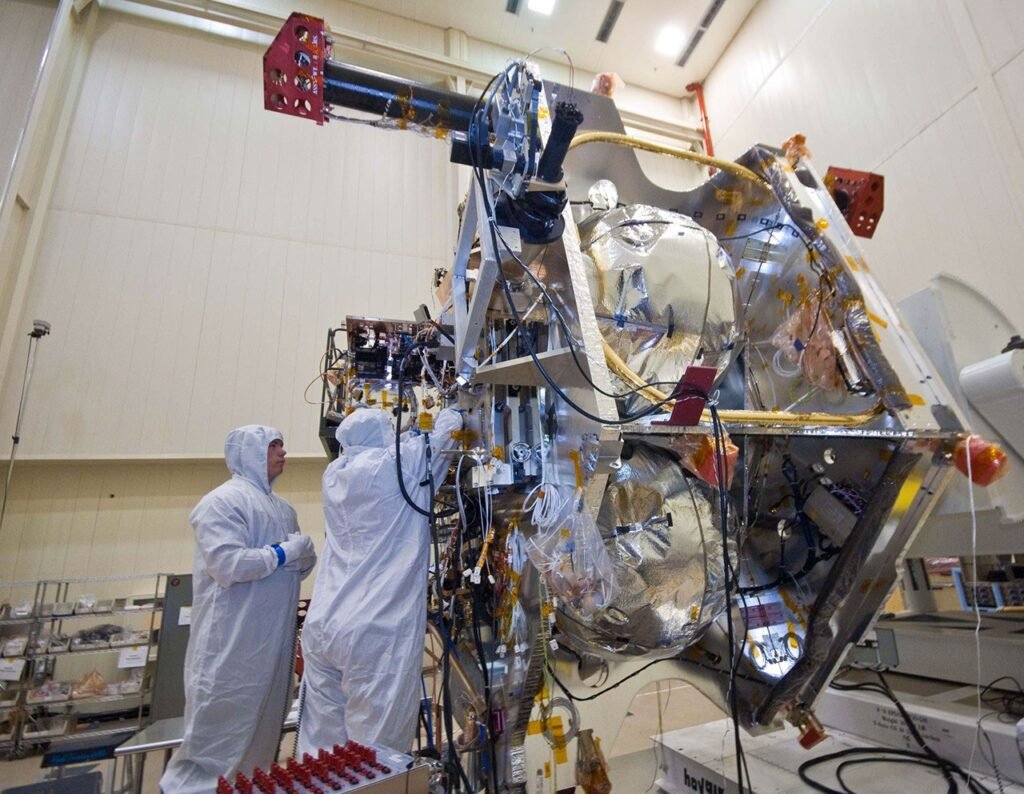
Work behind the title.
Installation
- Install avionics units, connectors and wiring.
- Follow drawings, routing and bonding requirements.
- Protect configuration and hardware condition.
Troubleshooting
- Read schematics and isolate electrical faults.
- Use meters and test equipment.
- Replace or repair approved components.
Verification
- Perform continuity, functional and built-in tests.
- Inspect workmanship and document results.
- Support return-to-service or integration decisions.
Concrete work products.
Accurate records are part of the technical work: they show what was installed, tested and accepted.
A realistic workflow, not a universal schedule.
Review work orders, drawings and safety conditions.
Check connectors, wiring, bonding and equipment status.
Run approved troubleshooting or functional procedures.
Document work, results and remaining discrepancies.
Aircraft maintenance and spacecraft integration operate under different rules; always follow the employer’s approved procedures.
CAREER DIRECTIONSWhere this career can lead
Installation Technician
Installs wiring, antennas and avionics units.
Bench Technician
Tests and repairs electronic assemblies.
Integration Technician
Verifies avionics within a larger vehicle or system.
Maintenance Technician
Troubleshoots operational aircraft electronics.
CAPABILITIESSkills you need
Electrical
Test
Quality
Professional
Tools you may encounter.
Actual toolchains vary by mission and employer; this is an exploration list, not a universal requirement.
Preparation and credible entry routes.
Technical school, community college and supervised work experience are routes to investigate.
Aircraft hangars, maintenance facilities and flight lines; schedules vary with operations.
Practice reading a wiring diagram and documenting a safe fault-isolation exercise.
Routes into the work
Technical-school route
Avionics or electronics program → supervised lab work → employer or regulatory requirements → technician role.
Military route
Avionics specialty → translate systems and maintenance evidence → address civilian credential gaps → related role.
Adjacent route
Industrial electronics or mechatronics → aircraft/space quality and documentation → avionics integration.
Example roles along the way.
- Avionics Student
- Electronics Apprentice
- Avionics Technician
- Bench Technician
- Senior Avionics Technician
- Lead Installer
- Inspector
- Avionics Supervisor
- Quality Lead
- Technical Specialist
Titles vary by organization. This is an example progression, not a guaranteed promotion ladder.
Avionics Technicians
National U.S. comparison data—not a salary claim for this space specialty.
This benchmark represents a broader occupation. Actual pay varies by employer, location, experience, education, clearance requirements and mission.
Build this: Wiring Diagram & Fault-Isolation Exercise
Create a safe simulated troubleshooting record for a simple avionics circuit.
- Draw or select a low-voltage circuit.
- Define the reported fault.
- Create an isolation sequence.
- Record expected measurements.
- Document the identified cause.
- Write a clear closeout note.
A curated resource shelf.
Follow the work, then the organization.
Current matching openings.
Matches use the profile’s role terms against OffWorldly’s selected commercial employer feeds. Verify requirements and closing status on the employer site.
Avionics Integration Technician
Kent, Washington
View opening ↗Avionics - Stage Integration & Test Engineer
Kent, Washington
View opening ↗Launch Engineer - Avionics Integration & Test
Cape Canaveral, FL
View opening ↗Avionics Engineering Internship - Spring 2027
El Segundo, CA
View opening ↗If this interests you, keep exploring.
TRANSPARENCYSource & methodology
Profile informed by O*NET Avionics Technicians (49-2091.00) and OffWorldly aerospace integration guidance. Requirements differ between aircraft maintenance and spacecraft manufacturing. Reviewed September 14, 2026.
Career families, specialty descriptions, example titles and projects are OffWorldly editorial classifications. They are designed for exploration and should be checked against each employer’s actual requirements.
Image: Juno spacecraft integration · NASA / JPL