
Flight Dynamics & Astrodynamics
Model trajectories, plan maneuvers and assess how uncertainty affects an orbit.
Work behind the title.
Mission design
- Select and trade candidate orbits against mission objectives.
- Evaluate launch windows, transfer options, delta-v, coverage and feasibility.
- Connect trajectory decisions to propulsion, power, communications and payload needs.
Trajectory design
- Design Earth-orbit, lunar, cislunar or interplanetary transfers.
- Target maneuvers, rendezvous and proximity operations.
- Model perturbations and compare performance under uncertainty.
Navigation & orbit determination
- Process tracking measurements and estimate spacecraft state.
- Build measurement models, propagate covariance and quantify uncertainty.
- Generate ephemerides and navigation products for mission teams.
Flight operations
- Plan, validate and reconstruct maneuvers.
- Support station keeping, conjunction response and critical mission events.
- Deliver flight products, procedures and real-time analysis when required.
Concrete work products.
These products turn mission objectives into geometry, timing and decisions that other spacecraft, ground and operations teams can use.
A realistic workflow, not a universal schedule.
Review the latest spacecraft state, ephemeris, tracking data and mission constraints.
Run trajectory, navigation or maneuver trades and compare assumptions.
Coordinate with GN&C, propulsion, mission operations, systems and navigation teams.
Validate analysis, prepare flight products, document limitations and review results.
Support launch, commissioning, burns, rendezvous, station keeping or anomaly response.
Design roles may be less time-critical. Operational roles can involve shifts or critical-event support; workflows vary by mission.
CAREER DIRECTIONSWhere this career can lead
Mission Design Engineer
Early-phase trajectories, mission architecture and feasibility trades.
Flight Dynamics Engineer
Operational orbit prediction, maneuver planning and flight products.
Orbit Determination / Navigation Engineer
Tracking, estimation, measurement modeling and uncertainty.
Astrodynamics Engineer
Advanced dynamics, modeling, simulation and optimization.
Rendezvous / Proximity Operations Engineer
Relative motion, docking, servicing and formation flight.
SSA / Conjunction Analysis Engineer
Orbit prediction, screening and collision-risk analysis.
Interplanetary Mission Designer
Planetary transfers, gravity assists and deep-space trajectories.
CAPABILITIESSkills you need
Technical foundations
Analytical skills
Software skills
Professional skills
Tools you may encounter.
Actual toolchains vary by mission and employer; this is an exploration list, not a universal requirement.
Preparation and credible entry routes.
A relevant engineering, physics or mathematics degree is a common route; compare each employer’s requirements.
Analysis teams, design reviews and mission planning; operational support may involve time-critical schedules.
Build an orbit-propagation project and explain your assumptions, maneuver choices and validation checks.
Routes into the work
Common academic route
Engineering, physics, mathematics, space systems or a technically rigorous space-operations program → orbital mechanics and numerical methods → programming → astrodynamics project → internship, research or team experience → entry role.
Adjacent engineering route
Mechanical, electrical, software or systems engineering → add orbital mechanics and mission-analysis experience → build a focused portfolio → move toward mission analysis or flight dynamics.
Graduate / research route
Advanced study in estimation, nonlinear dynamics, optimal control, trajectory optimization or astrodynamics can support research-heavy specialties; graduate study is not universal.
Example roles along the way.
- Mission Analysis Intern
- Flight Dynamics Intern
- Astrodynamics Intern
- Space Systems Intern
- Mission Analyst
- Flight Dynamics Engineer I
- Astrodynamics Engineer
- Navigation Engineer
- Senior Flight Dynamics Engineer
- Senior Mission Analyst
- Navigation Lead
- Mission Design Lead
- Principal Astrodynamics Engineer
- Flight Dynamics Lead
- Mission Design Manager
- Technical Fellow / SME
Titles vary by organization. This is an example progression, not a guaranteed promotion ladder.
Aerospace Engineers
National U.S. comparison data—not a salary claim for this space specialty.
This benchmark represents a broader occupation. Actual pay varies by employer, location, experience, education, clearance requirements and mission.
Build this: LEO Mission Analysis Project
Design and analyze a small-satellite mission orbit.
- Define a mission objective.
- Select an initial orbit.
- Propagate it for approximately 30 days.
- Model at least one perturbation.
- Generate a ground track or orbital visualization.
- Calculate ground-station contact opportunities.
- Design one maneuver.
- Compare pre- and post-maneuver states.
- Document assumptions and limitations.
- Create a one-page mission-analysis summary.
A curated resource shelf.
Find courses and tutorials for orbital mechanics and mission analysis.
Explore inside OffWorldly →PRACTICEFreeFlyer and GMAT projectsBuild repeatable analysis with documented assumptions and results.
Explore inside OffWorldly →SOFTWAREFreeFlyer mission-analysis softwareReview publisher tools for propagation, navigation and trajectory studies.
Official source ↗REFERENCENASA flight-dynamics capabilitiesUse official mission examples to understand real work products.
Explore inside OffWorldly →Follow the work, then the organization.
Current matching openings.
Matches use the profile’s role terms against OffWorldly’s selected commercial employer feeds. Verify requirements and closing status on the employer site.
GNC Engineer
Kent, Washington
View opening ↗Guidance, Navigation & Controls (GNC) Internship - Spring 2027
El Segundo, CA
View opening ↗Guidance, Navigation & Controls (GNC) Internship - Summer 2027
El Segundo, CA
View opening ↗Senior Guidance, Navigation, and Controls (GNC) Engineer
El Segundo, CA
View opening ↗If this interests you, keep exploring.
TRANSPARENCYSource & methodology
Flight Dynamics guidance is OffWorldly editorial content grounded in NASA Ames Flight Dynamics, NASA Johnson Space Center GN&C capabilities, O*NET Aerospace Engineers (17-2011.00), and the BLS Aerospace Engineers benchmark. Reviewed September 14, 2026.
Career families, specialty descriptions, example titles and projects are OffWorldly editorial classifications. They are designed for exploration and should be checked against each employer’s actual requirements.
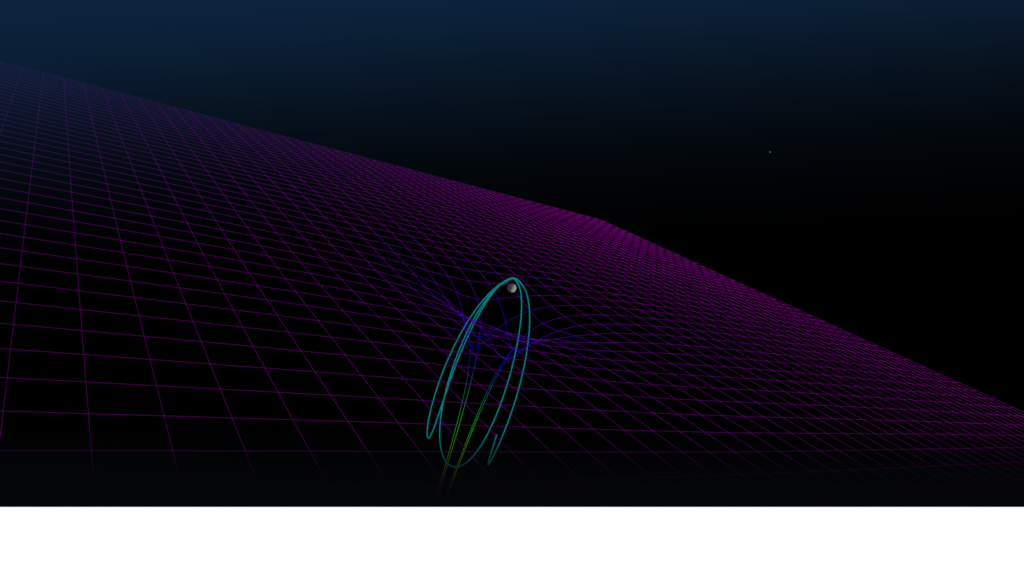
Image: FreeFlyer mission visualization interface · FreeFlyer® / a.i. solutions